

Leather reacts to whatever you clean it with. The same product that refreshes a protected sofa can leave a permanent dark patch on an untreated one. So before you wipe anything onto your couch, find out what kind of leather you own and test in a spot no one sees. The rest is straightforward.
We have hand-cleaned leather across NYC since 2016, and the home method below follows the same logic our technicians use on the job: identify the leather, clean in sections, never soak it, then put the moisture back.
Start by identifying your leather type
Five types cover almost every couch, and each one takes a different touch:
- Aniline: soft, natural, no protective coating. It soaks up water and stains, so it needs the lightest hand and the least moisture.
- Semi-aniline: a thin protective coat over natural grain. It handles gentle cleaning better than pure aniline.
- Pigmented (protected): a durable surface coat. The most forgiving type, and the most common on family sofas.
- Bonded: leather blended with polyurethane. Clean it with care and never let it sit wet.
- Faux / PU: not real hide, but it still cracks once it dries out. Wipe and condition with leather-safe products.
Two quick checks at home. Look for a tag under a cushion or on the frame that names the type. No tag? Put one drop of water on a hidden spot. On pigmented leather it beads on the surface. On aniline it sinks in and darkens within seconds. If it sinks, treat the whole couch as the delicate kind.
What you need, and what to skip
Supplies:
- A pH-balanced cleaner made for leather
- Two microfiber cloths, one damp and one dry
- A vacuum with a soft brush attachment
- A leather conditioner that matches your leather type
Keep these away from the couch: all-purpose sprays, dish soap, baby wipes, vinegar, ammonia, and melamine “magic” sponges. They strip the finish or dry out the hide. Saddle soap belongs on boots, not on a finished sofa.
Clean it in five steps
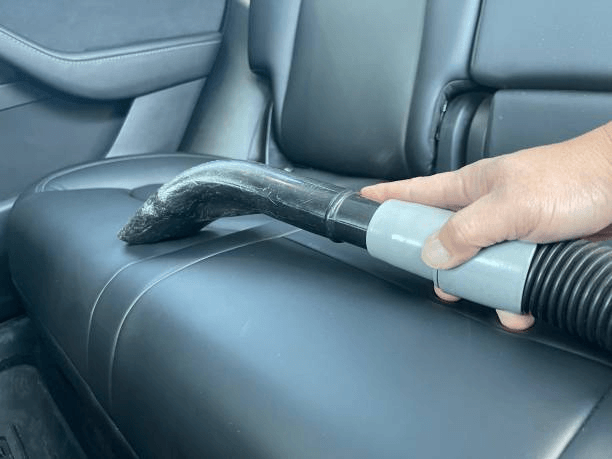
- Vacuum first. Run the soft brush over the whole couch and into seams, piping, and the gaps under cushions. Grit left in the creases scratches the surface once you start wiping.
- Test the cleaner. Put a little on a hidden patch, wait a few minutes, and check for any color change. If the spot looks fine, carry on.
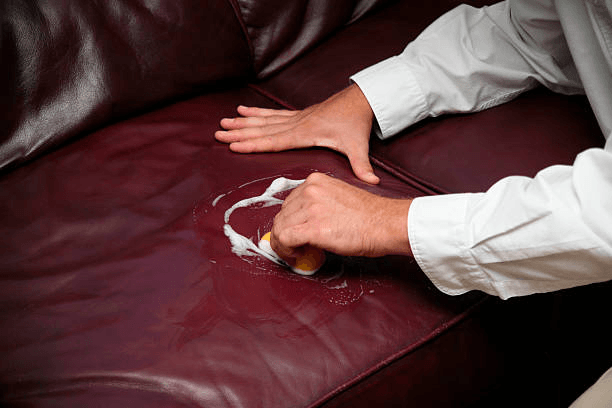
- Clean in sections. Dampen a microfiber cloth, add a small amount of cleaner to the cloth (not to the couch), and wipe one panel at a time in light circles. Keep the cloth damp, not wet. Leather and standing water do not mix.
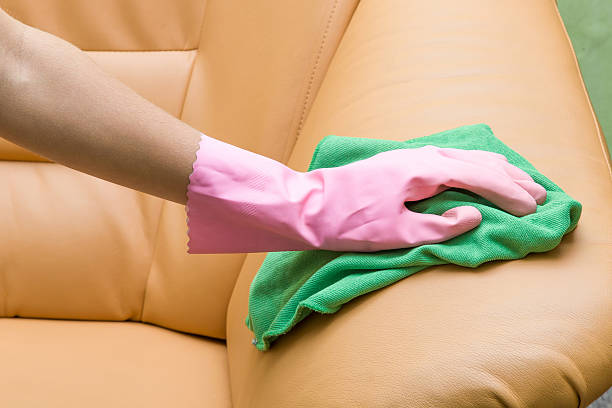
- Wipe and dry. Go over each panel with the dry cloth to lift residue. Let the couch air-dry away from radiators, vents, and direct sun. Skip the hair dryer. Heat is what cracks leather.
- Condition. Once the leather is dry, work a thin layer of conditioner over the surface and let it absorb. This replaces the oils that cleaning and daily use pull out, and it is the step most people skip.
What not to do to leather
- No steam. Steam and high heat dry the hide, then crack and warp it. Steam machines work on water-safe upholstery, not on leather.
- No soaking. Water left sitting on leather leaves marks and weakens the surface.
- No unknown chemicals. If the label does not say “for leather,” keep it off the couch.
- No direct sun or heat. A sofa next to a sunny window or a radiator dries and fades long before one in the shade.
Which stains you can handle, and which need a pro
Fresh spills and light surface grime are a fair home job. Blot a spill the moment it happens with a dry cloth, then clean the area as above. Speed matters most with liquids, since they sink into untreated leather fast.
Call a professional for ink, dye transfer from denim or newsprint, deep set-in stains, water rings, and any cracking or peeling. These need leather-specific treatment, and the wrong home fix often sets the stain or lifts the color. Aniline and antique pieces are worth a pro from the start, because they show every mistake.
When to bring in Eco Cleaning
We clean leather by hand across Manhattan, Brooklyn, Queens, the Bronx, and Staten Island. No machines and no steam: a pH-balanced leather soap worked in by hand, then conditioning that restores suppleness. Every job runs through our 50-point quality check, and our 100% Satisfaction Guarantee gives you 24 hours to flag anything plus a free re-clean within 48.
If your couch is aniline, antique, heavily soiled, or already cracking, book a clean instead of guessing. See our Leather Furniture Cleaning service, or call (929) 531-6264 for a free quote.
FAQ
How often should I clean a leather couch?
Dust it weekly with a dry microfiber cloth, clean with a leather cleaner every two to three months, and condition two to three times a year. Sofas near a window or radiator, or in a home with pets, need it more often.
Can I steam clean a leather couch?
No. Steam dries leather and causes cracking. Use a damp cloth and a leather cleaner, never a steam machine.
Is vinegar safe on leather?
Skip it. Diluted vinegar shows up in a lot of online tips, but it is acidic and wears down the finish over time. A pH-balanced leather cleaner is the safer choice.
My leather is dry and cracking. Can I fix it?
Conditioning restores some suppleness and slows further damage, but deep cracks and torn finishes need professional treatment or repair. Condition now, and have it assessed before the cracks spread.
What is the safest all-around method?
Vacuum, test, clean in sections with a damp cloth and leather cleaner, dry away from heat, then condition. That sequence works on most finished leather.


