
Most small offices do not need a deep clean every week. They need a rhythm. When nobody owns the wiping-down and the trash and the kitchen sink, those jobs pile up until the whole place feels neglected, and then someone burns a Saturday fixing it.
I run cleaning crews across New York City, and the offices that stay presentable without much effort all do the same thing. They split the space into zones, assign each zone a frequency, and stop treating “clean the office” as one giant task. A ten-minute end-of-day pass by whoever is closing beats a three-hour scramble once a month.
Here is the routine my team uses on light-maintenance accounts, rewritten so a two-person or ten-person office can run it themselves.
Start with a caddy and two microfiber colors
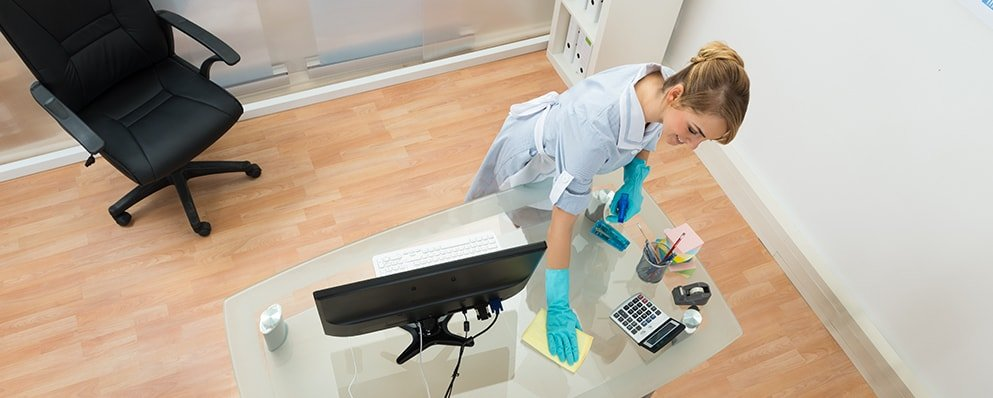
Before any zone work, set up a caddy anyone can grab: an all-purpose spray, glass cleaner, a stack of microfiber cloths, disposable gloves, and a roll of trash liners. Keep one microfiber color for desks and general surfaces and a second color for the restroom and kitchen sink. That way nobody carries restroom germs back to a keyboard. This one habit does more for hygiene than any fancy product.
Damp-wipe, do not soak. A cloth that leaves streaks or puddles is too wet. Fold it into quarters so you get eight clean faces before it goes in the laundry pile.
Desks and workstations (daily light, weekly full)
The desk is where people eat, sneeze, and drop crumbs into keyboards, so it earns the most frequent attention.
Every day, do a light pass: clear coffee cups, wipe the visible desk surface where hands and food sit, and empty the deskside trash if there is one. Skip the clutter archaeology. You are keeping the surface usable, not reorganizing.
Once a week, do the full version. Move the keyboard, monitor stand, phone, and framed photos aside. Spray the all-purpose cleaner onto the cloth, not onto the desk, and wipe top to bottom so dust falls onto surfaces you have not done yet. Get the front edge where forearms rest, the drawer pulls, and the back corner where cables collect dust. Put everything back and give the chair armrests a quick wipe while you are there.
Shared surfaces and door handles (daily)
These are the spots the most hands touch, and they get missed because they belong to nobody. Door handles, light switches, the printer touchscreen, shared phone handsets, cabinet pulls, the fridge door, and stair railings.
Wipe these high-touch points once a day with a damp cloth. It takes about four minutes for a whole small office. Do it near the end of the day so surfaces are fresh the next morning, and do the handles last so you are not spreading anything from door to door as you go.
Kitchen and breakroom (daily wipe, weekly reset)
The breakroom sink is the fastest way for an office to start smelling. A daily wipe keeps it boring, which is exactly what you want.
Each day, wipe the counter, the outside of the microwave, and the sink. Run the dishwasher if it is full, or at least clear the sink of anybody’s abandoned mug. Take the kitchen trash out whenever it hits about three-quarters full rather than waiting for it to overflow, because that is when liners split and liquids reach the bin bottom.
Once a week, reset the space. Wipe the inside of the microwave (heat a bowl of water for a minute first and the splatter wipes off without scrubbing), clear expired food from the fridge, wipe the fridge shelves and the coffee machine drip tray, and run an empty dishwasher cycle with a cleaner if the machine smells. Sanitize the sink and the sponge, or toss the sponge if it has gone sour.
Restrooms (daily, and do them right)
An office restroom is small, so a proper daily clean takes ten minutes and prevents the buildup that forces a scrub-out later. Use your restroom-only cloth color here and wear gloves.
Every day: refill soap, paper towels, and toilet paper first so nobody runs out mid-morning. Clean the toilet bowl with cleaner and a brush, wipe the seat, lid, and the flush handle, then wipe the sink, faucet, and the counter around it. Do the mirror with glass cleaner and finish with the door handle and light switch. Empty the trash. Work top surfaces to floor, and always wipe the toilet exterior before the sink so you never carry that cloth backward.
Do the floor at least twice a week with a damp mop, more if the office is busy.
Floors (vacuum weekly, spot-clean as needed)
Hard floors and low-traffic carpet do not need daily attention in most offices. Sweep or dust-mop entry areas daily if people track in city grit, then vacuum carpet and rugs once a week, going slowly enough that the machine actually lifts the dirt rather than skating over it. Move light chairs so you get the traffic lanes underneath.
Deal with spills the moment they happen. Blot a carpet spill with a dry cloth, working from the outside in so you do not spread the stain, then dab with a little water. Do not rub, and do not soak it, because over-wetting a carpet is how you get a mark that lasts longer than the spill would have.
Electronics (weekly, gently)
Screens, keyboards, and phones collect fingerprints and dust that a wet spray will ruin. Power the device down or lock the screen first. For a monitor, use a dry microfiber cloth, or a slightly damp one on stubborn marks, and never spray liquid onto the screen. For a keyboard, turn it upside down and shake the crumbs out, then run a cotton swab between the keys and wipe the tops with a barely-damp cloth. Do the mouse, the phone, and the desk lamp switch the same way. Once a week is plenty unless someone has been eating over the keys.
Your frequency plan at a glance
Pin this by the supply caddy so it is not just in one person’s head.
Daily: deskside trash, high-touch surfaces and door handles, kitchen counter and sink, full restroom clean, entry-floor sweep.
Weekly: full desk wipe, kitchen reset, vacuum all floors, wipe electronics, restroom floor twice.
Monthly: baseboards and window sills, blinds, inside kitchen cabinets, behind and under furniture, air vent grilles, and a look at anything the daily and weekly passes keep skipping.
When it is worth handing off
The routine above keeps an office presentable. What it will not do is the heavy work: extraction-cleaning carpets that have gone gray in the traffic lanes, restoring tile grout, or handling a whole floor after a renovation. Those need commercial equipment and someone trained to use it, and trying to fake it with a mop usually makes carpet look worse.
That is the line where my team takes over. Eco Cleaning has run cleaning across NYC since 2016, and every job we finish goes through a 50-point checklist before we call it done. If your team is spending more time cleaning than working, or you want the deep work handled on a schedule, our NYC office cleaning service picks up where the daily routine ends.
Keep the daily rhythm going yourself. It is cheap, it takes minutes, and it is the difference between an office that always looks fine and one that needs rescuing.
By Alex Sonier, CEO and Head Trainer, Eco Cleaning NYC. Questions about a cleaning plan for your office? Call (929) 531-6264.