

Nail polish hits the carpet, and the clock starts. What you reach for next matters more than how fast you move, because the wrong remover can bleach the fibers or melt them while the polish is still sitting there. Read the two minutes below before you touch the stain.
We have cleaned carpet in homes across NYC since 2016, more than 20,500 properties to date, and the home method here follows the same order our technicians use: identify the fiber, test the remover, then lift the polish from the outside in.
Test your carpet and your remover first
Acetone and acetone-based nail polish remover dissolve polish well, and that same strength is the problem. On the wrong fiber, acetone melts the carpet or strips its dye, and that damage does not come back. Two checks save you from a bleached patch.
First, find your fiber. Look for a tag on the back of a loose rug or a spec sheet from the install. Wall-to-wall carpet is usually nylon, polyester, olefin, or wool. The label on the back of your remover tells you the rest: if it lists acetone, treat it as the high-risk option.
Second, test in a hidden spot. Dab a little remover on carpet inside a closet or under a piece of furniture, wait a minute, then press a white cloth onto it. If color transfers to the cloth or the pile changes texture, stop. That carpet cannot take acetone.
Where acetone is risky:
- Acetate and triacetate dissolve in acetone. Keep it off these fibers.
- Some synthetics and blends soften or fuse. Your hidden-spot test catches this.
- Any dyed carpet can lose color where acetone sits, which leaves a pale ring next to the stain.
- Wool needs cool water and a neutral-pH cleaner, not solvents. Acetone dries and damages the fiber.
For wool and any carpet that fails the test, skip acetone and use dish soap in cool water. It works slower on polish, so plan on more passes.
How to get wet nail polish out of carpet
Wet polish gives you the best odds, so move while it is still liquid. Do not rub it. Rubbing spreads the polish wider and frays the pile.
- Blot the excess. Press a dry white cloth or paper towel straight down onto the spill to soak up loose polish. Lift, fold to a clean section, and press again. Work from the outside of the stain toward the center so you do not push it wider.
- Pick your remover. On nylon, polyester, or olefin that passed the test, use acetone-based remover. On wool or any fiber that failed, use a teaspoon of clear dish soap in a cup of cool water.
- Apply to the cloth, not the carpet. Put a small amount on a clean white cloth and blot the stain. Flooding the carpet drives polish into the backing and the pad underneath.
- Keep blotting and switching cloths. Move to a clean part of the cloth each time so you lift color instead of redepositing it. Repeat until no more polish transfers.
- Rinse and dry. Blot the area with a cloth dampened in plain cool water to pull out any remover or soap, then press with a dry towel. Lay a clean dry towel over the spot, weight it, and let it air-dry, or aim a fan at it.
How to get dried nail polish out of carpet
Dried polish is harder because it has bonded to the fibers, and on light or delicate carpet it may not fully lift. Set that expectation before you start, then work patiently.
- Soften the surface. Scrape gently with the edge of a dull spoon or a plastic card to lift the loose top layer. Scrape, do not gouge, and stop if fibers start to pull.
- Loosen what is left. Lay a cloth dampened with warm (not hot) water over the polish for a few minutes to soften the bond. Patience here beats force.
- Treat by fiber. On test-safe synthetics, blot with acetone-based remover on a cloth. On wool or untested carpet, use the cool dish-soap solution and accept that it takes longer.
- Blot from the edge in. Press and lift, working the perimeter toward the center, switching to clean cloth sections as color comes up. Resist the urge to scrub.
- Rinse, dry, repeat. Blot with plain cool water, press dry, and let it sit. Dried polish often needs several rounds across a day rather than one hard scrub.
If a faint shadow stays after repeated passes, you have reached the limit of a home method on that fiber and dye. Call a professional rather than keep working at it.
What not to do
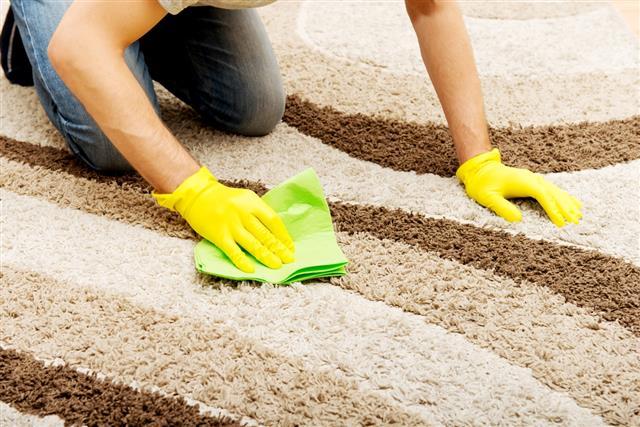
- Do not scrub. Scrubbing pushes polish deeper, spreads it wider, and frays the pile. Blot every time.
- Do not skip the hidden-spot test. A bleached ring from untested acetone is permanent, and it is worse than the original stain.
- Do not pour remover onto the carpet. Apply it to a cloth so polish and solvent stay out of the backing and pad.
- Do not use hot water or heat on the stain. Heat can set polish and harm wool. Warm at most for softening, then cool to rinse.
- Do not mix removers and cleaners. One product at a time keeps the chemistry predictable and the fiber safe.
- Do not work an old stain into the backing. If it has reached the pad, surface blotting will not reach it.
When the stain won’t budge
Some spills will not fully come out at home, and pushing harder usually makes them worse. Call a professional when the polish has dried into a light-colored or delicate carpet, when it has soaked through to the backing or pad, when acetone has left a color change, or when the carpet is wool or a wool blend you would rather not risk.
A pro starts by identifying the fiber, then matches a pre-treatment to its pH instead of guessing, lifts the polish with hot-water extraction, and dries the area under control so it does not wick back. We will tell you up front if dried polish on a light or delicate carpet may not lift all the way. An honest read beats a promise that leaves a shadow behind.
FAQ
Will acetone ruin my carpet?
It can. Acetone dissolves acetate and triacetate, softens some synthetics, and strips dye on any colored carpet, which leaves a pale ring. Test a hidden spot first, and keep acetone off wool entirely.
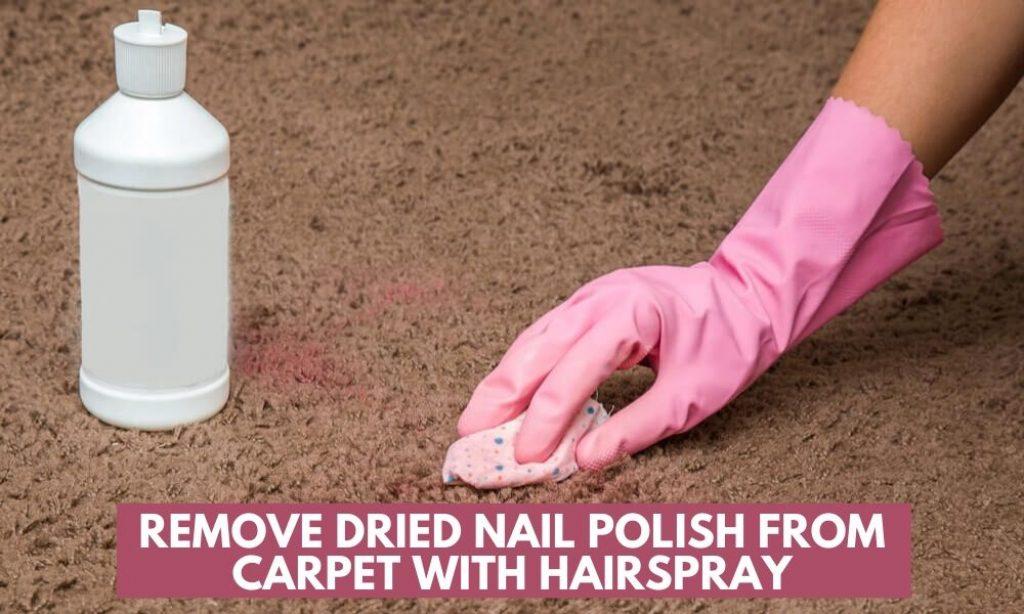
Does hairspray work on nail polish?
Older hairsprays carried enough solvent to soften polish, but most modern formulas do not, and the added oils and resins can leave their own mark on carpet. A tested fiber-safe remover or cool dish-soap solution is the more reliable choice.
Can dried nail polish be removed from carpet?
Often, but not always. Scrape the loose top layer, soften the rest with a warm damp cloth, then blot with a fiber-safe remover across several passes. On light or delicate carpet it may not fully lift, and that is when a professional clean is worth it.
Is dish soap safe on wool carpet?
Yes. A little clear dish soap in cool water is the right call for wool, which needs cool, neutral-pH care and no solvents. It works slower than acetone, so plan on extra passes.
How fast do I need to act?
The sooner the better. Wet polish blots out far more easily than dried, so reach for a clean dry cloth the moment it spills and work from the edge of the stain inward.
When to bring in Eco Cleaning
We clean carpet across Manhattan, Brooklyn, Queens, the Bronx, and Staten Island, with more than 20,500 properties cleaned since 2016. Our technicians identify the fiber, match the pre-treatment to its pH, lift the stain with hot-water extraction, and dry the carpet under control. Every job runs through our 50-point quality checklist with photos, backed by a 100% Satisfaction Guarantee: a report within 24 hours, a free re-clean within 48, and a refund option if it is still not right.
If the polish has dried in, reached the backing, or sits on wool or a light carpet, book a clean instead of risking a bleached patch. See our Carpet Cleaning service, or call (929) 531-6264 for a free quote.
By Alex Sonier, CEO & Head Trainer, Eco Cleaning NYC