
Most people call any smooth resilient floor “linoleum.” Half the time they are standing on vinyl. The distinction matters more than it sounds, because the two floors want opposite treatment, and the cleaner that keeps one bright will slowly dull the other.
I have trained our crews on this since 2016, and the linoleum callbacks almost always trace to the same mistake: someone cleaned real linoleum like it was vinyl. So start there.
Linoleum or vinyl? Check before you clean
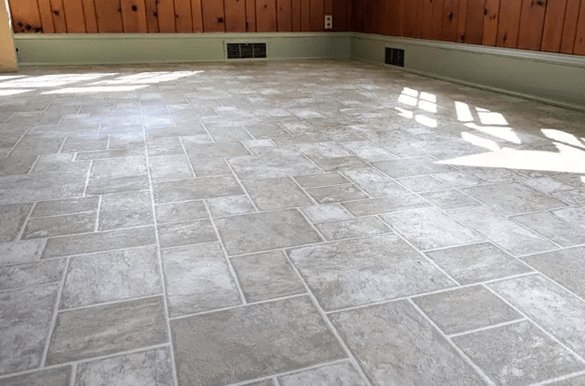
Real linoleum is made from linseed oil, cork dust, wood flour, and pine resin pressed onto a jute backing. The color runs all the way through the material, not just across the top. It has a faint oily or nutty smell, especially in an older kitchen on a warm day. Because it is a natural, porous product, it drinks up water and reacts badly to strong alkaline cleaners.
Vinyl is plastic, usually PVC, with a printed pattern under a clear wear layer. The pattern sits on the surface, so a deep chip shows a different color underneath. Vinyl shrugs off moisture and tolerates a much wider range of cleaners.
Two quick tests. Look at a cut edge or a worn spot near a doorway: consistent color top to bottom points to linoleum, a color change points to vinyl. Second, if you know the floor went in before the late 1980s and has never been replaced, it is probably true linoleum. When you are not sure, treat it as linoleum. The gentle routine below is safe on both; the aggressive one is not.
Why standing water and harsh alkalis are the enemy
Linoleum’s linseed-oil binder is what keeps the floor flexible and sealed. Standing water works into the seams and the porous body, lifts the material off its backing, and leaves you with curling edges and soft spots. Harsh alkaline products, ammonia, and most “heavy duty” degreasers strip the protective finish and start breaking down that binder. Once the finish is gone, the surface dries out, chalks, and takes on stains it used to repel.
You do not see the damage the first time. You see it after a season of over-wet mopping, when the shine has gone flat and no amount of buffing brings it back.
The routine clean (weekly)
This is the whole job for a floor that gets normal foot traffic.
- Dry first. Sweep or vacuum on the bare-floor setting. Grit is an abrasive, and dragging a wet mop over it grinds fine scratches into the finish. Get the corners and the strip under the cabinet toe-kick where dust piles up.
- Mix a mild solution. A few drops of dish soap or a pH-neutral floor cleaner in a bucket of warm water. Skip anything labeled ammonia, bleach, or degreaser.
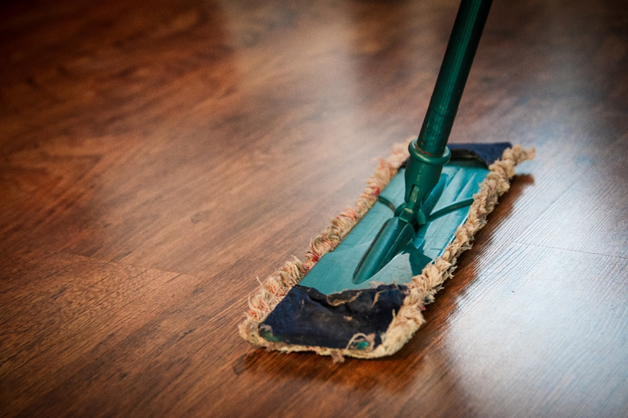
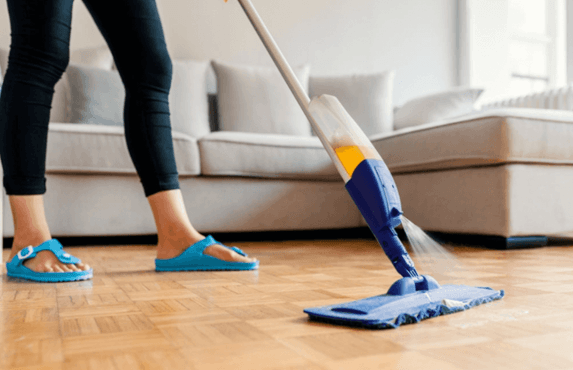
- Damp mop, not wet mop. Dip the mop, then wring it until it stops dripping. It should feel barely damp on your hand. Work in small sections so no area sits under a film of water.
- Rinse if you used soap. Go back over the floor with a clean, wrung-out mop and plain warm water to pull up soap residue. Leftover soap attracts dirt and looks hazy.
- Dry it. Wipe up any remaining moisture with a towel, or open a window and run a fan. Do not let puddles air-dry in the seams.
Done right, this takes ten minutes in an average kitchen and keeps the finish intact for years.
Stuck grime and stubborn spots
For the buildup that a damp mop leaves behind, reach for baking soda before anything stronger. Make a paste with a little water, spread it on the spot, wait a few minutes, then work it with a soft cloth or a non-scratch pad. It lifts grease and scuffs without touching the finish.
Rubber heel marks usually come up with a dab of the paste or a pencil eraser. For a sticky residue, warm water and patience beat a stronger chemical every time. Rinse the treated spot and dry it when you are done.
Two things to keep off linoleum no matter how tempting: abrasive scouring powders and steel wool, which cut visible tracks into the surface, and acetone or nail-polish remover, which softens the binder and leaves a dull patch you cannot buff out.
Gentle products that protect the finish
Stick to pH-neutral. Dish soap in warm water, a cleaner labeled safe for linoleum or “no-rinse pH neutral,” and baking soda for spot work cover nearly everything a home floor throws at you. On our jobs we lean on plant-based, low-water methods, which suits linoleum well because the floor never gets flooded in the first place.
If you want a little shine back, a linoleum-specific polish or a thin coat of floor finish restores it. Do this rarely, once or twice a year, and only on a fully clean, dry floor, or the polish traps dirt underneath.

What quietly damages linoleum
- Rubber-backed or latex-backed mats. They trap moisture and can react with the floor, leaving yellow or brown staining you cannot remove. Use mats with a natural, colorfast backing.
- Furniture dragged across the surface. Put felt pads under chair and table legs, and lift rather than slide heavy pieces.
- Sunlight, in both directions. Long stretches of full darkness let some linoleum yellow, while harsh direct sun over years can fade it. Normal daylight is fine.
- Over-cleaning. Scrubbing a linoleum floor to a deep clean every week wears the finish faster than the dirt ever would. Routine damp mopping plus one or two thorough cleans a year is the right cadence.
When to bring in a pro
Call a professional when the shine is gone and mopping does nothing, when a floor has years of layered polish and grime that needs stripping and refinishing, or when you have a large commercial space where over-wetting the seams is a real risk. Stripping old finish off linoleum without soaking the material is a controlled job, and the wrong product can ruin a floor that had decades of life left.
At Eco Cleaning NYC our crews train specifically on resilient floors, we clean against a 50-point checklist with photo documentation, and every job carries our 100% satisfaction guarantee: flag anything within 24 hours and we return to reclean the spot within 48. If your linoleum has reached that point, our professional floor cleaning service covers Manhattan, the Bronx, and New Jersey.
To book or ask a question, call (929) 531-6264.
By Alex Sonier, CEO & Head Trainer, Eco Cleaning NYC.