

Open the door on a machine you thought was doing the dirty work, get hit with a sour, swampy waft, and your first instinct is to run a cycle with something in it. Vinegar, a store-bought tablet, whatever is under the sink. Sometimes that works. Often it does not, because the smell is not floating in the air. It is coming from a spot you have not touched.
A dishwasher smells for a reason you can point to. Once you know which of the five common causes you are dealing with, the fix takes twenty minutes and it stays fixed. I train our technicians to diagnose before they scrub, and the same habit works at home. So before you reach for a jug of anything, find the source.

Start With Your Nose and Your Hands
Two quick checks tell you most of what you need.
First, open the door right after a finished cycle and again first thing in the morning. A smell that is strongest after sitting overnight points to standing water or trapped food fermenting in a low spot. A smell that hits during the wash usually means the spray arm or the interior walls are coated.
Second, pull out the bottom rack and look at the floor of the tub. Is there water pooled around the filter hours after the cycle ended? That is a drainage problem, not a cleaning problem, and no amount of vinegar fixes it. Note what you find, then work through the causes below in order. The first two solve most cases.
Cause 1: A Clogged Filter (the usual culprit)
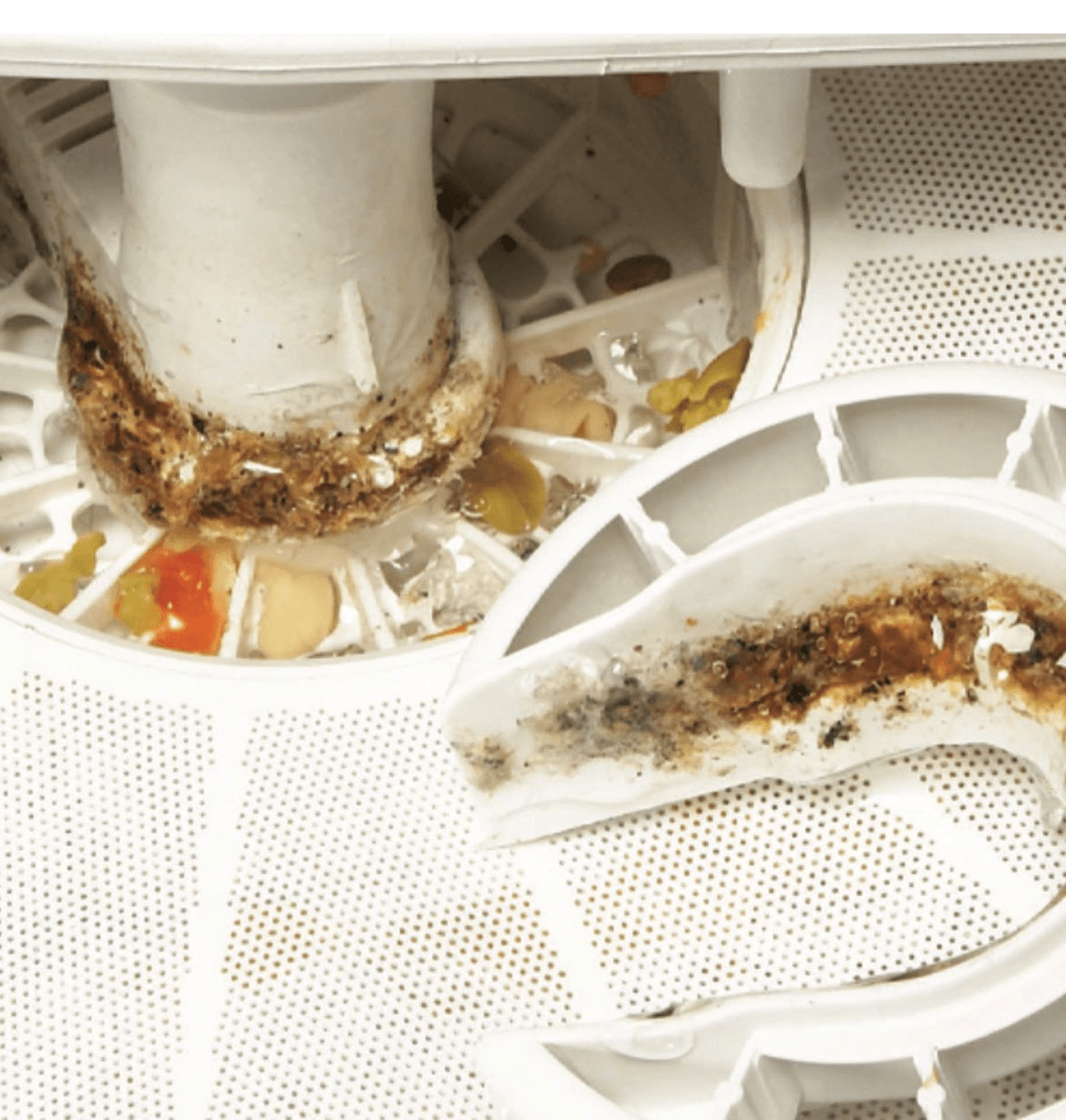
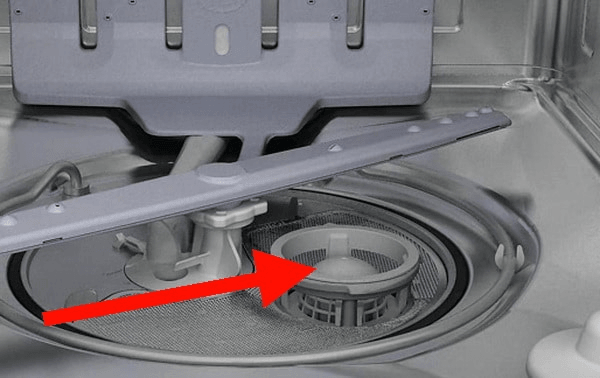
At the bottom of the tub, under the lower spray arm, sits a cylindrical filter that most people never remove. Food that rinses off your plates lands here. Older machines self-clean this with a grinder; most dishwashers made in the last fifteen years do not, and the manual says to clean the filter by hand. Almost nobody reads that part.
Twist the filter counterclockwise and lift it out. If it smells and looks like a compost bin, you found your problem.
- Rinse it under hot running water in the sink.
- Work an old toothbrush or a bottle brush into the mesh and the pleats, where grease and coffee grounds hide.
- Add a drop of dish soap and scrub the plastic housing it sits in too, not just the filter.
- Hold it up to the light. If you can see through the mesh cleanly, it is done. Twist it back in until it locks.
Do this once a month if you run the machine daily. That single habit prevents more smells than any rinse cycle.
Cause 2: A Jammed Spray Arm
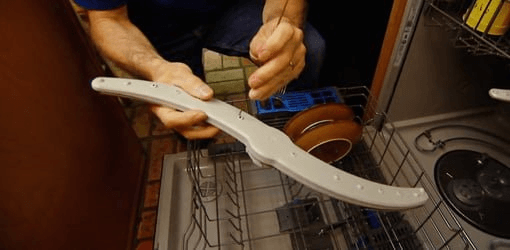
The spray arms are the spinning bars with tiny holes that shoot water at your dishes. Grease and hard-water minerals plug those holes over time. When they clog, water sprays weakly, dishes come out with a film, and the arm itself starts to smell because gunk is baked onto it.
Unclip the lower arm (most pop off with a gentle pull or a quarter turn of a center cap; check your manual). Hold it over the sink and poke each hole with a toothpick or a straightened paperclip. Run water through both ends and watch it come out the holes evenly. Wipe the arm down, then snap it back on. Do the top arm too if your machine has one.
Cause 3: Greasy Biofilm on the Walls and Seals
Run your finger along the inside of the door and around the rubber gasket that seals it. If it comes away with a sticky brown or gray smear, that is biofilm: a layer of grease, soap scum, and food film that builds on every surface the water touches. It clings to the walls, the door, the gasket folds, and the edge you never see with the door shut.
This is where you actually clean the box.
- Wipe the walls and door with a hot, soapy cloth. A magic eraser handles stubborn scum.
- Pull the gasket back gently and get into the folds with the cloth or an old toothbrush. Mold and black mildew love those creases.
- Wipe the bottom edge of the door, below the gasket, where water drips and sits.
- Do not forget the detergent dispenser cup, which cakes up with old soap.
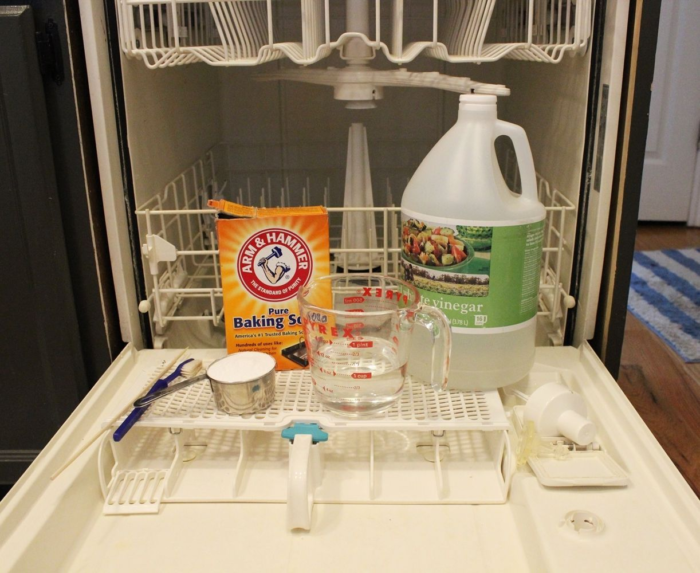
For a deeper reset, put a dishwasher-safe bowl with a cup of white vinegar on the top rack and run a hot cycle with nothing else inside. The vinegar circulates and cuts the film the cloth missed. Skip the old trick of dumping vinegar and baking soda together in the same cycle; they cancel each other out into salty water and do less than either alone.

Cause 4: Standing Water That Never Drains
If water sits in the bottom of the tub between cycles, it goes stagnant and sour within a day. Bail out what you can with a cup and a sponge, then figure out why it is there. The filter you cleaned in Cause 1 is a frequent reason, since a blocked filter stops the tub from draining. If the filter is clean and water still pools, the blockage is further down the line, in the drain hose or the disposal connection.
Cause 5: The Drain Hose and Air Gap
Your dishwasher drains through a hose that usually loops up and connects to the sink drain or garbage disposal. Two things go wrong here.
If you had a new disposal installed recently, the installer may have left the knockout plug in the disposal inlet, so your dishwasher has been draining into a dead end and backing up. That is worth checking under the sink.
Otherwise, the hose itself collects grease and can grow its own smell, or the air gap (the small chrome cap on the countertop next to the faucet, if your setup has one) clogs with debris. Unscrew the air gap cap and clear it. Clearing a grease-packed drain hose is more involved and is where a lot of people call for help, since it means disconnecting plumbing under the sink.
If the smell traces back to the plumbing behind the machine, or the buildup has gone past what a cloth and a brush can reach, that is a reasonable point to bring in a pro. Our team handles the heavy-duty kitchen cleaning that goes beyond a quick wipe, including the greasy corners around and under appliances that a normal cleaning skips.
Keep It Fresh (the habits that actually stick)
Cleaning the machine once solves today. These keep it from coming back.
- Scrape, don’t pre-rinse to death. Knock food scraps into the trash, but leave a little residue. Modern detergent needs something to grip, and heavy pre-rinsing wastes water. Just keep bones, seeds, and stringy peels out of the tub.
- Check the filter monthly. Thirty seconds of looking beats a smell you have to hunt down later.
- Wipe the gasket weekly. A quick pass with a damp cloth stops mold before it starts.
- Leave the door cracked after a cycle. Trapped moisture with the door sealed shut is what breeds the musty smell overnight. A gap lets it dry.
- Run the machine often. A dishwasher used a few times a week smells better than one that sits idle for a week with a little water and food inside going stale.
- Deal with fish, egg, and garlic residue fast. Strong-smelling food leaves the strongest lingering odor. Rinse those plates a bit more before they go in.
One Safety Note
Never mix vinegar with bleach or any chlorine-based product. Many detergents and cleaning sprays contain chlorine, so read the label before you combine anything. The reaction gives off toxic fumes. If a cleaner does not spell out that it is safe to mix, keep it on its own.

Work through the causes in order and a smelly dishwasher is a solved problem, not a mystery. When the source turns out to be baked-on grease under and behind the machine, or plumbing you would rather not open up yourself, Eco Cleaning covers that. Call (929) 531-6264 and we will take the messy part off your hands.
By Alex Sonier, CEO & Head Trainer, Eco Cleaning NYC


