
You spend about a third of your life on your mattress. While you sleep, your body sheds skin, sweat, and oils into the foam. None of it leaves on its own. Over months and years it builds into a hidden layer that affects how you breathe at night and how rested you feel each morning.
This article covers what collects inside a mattress, how it ties to allergies, asthma, and sleep quality, and what cleaning does about it. (For a step-by-step routine and for tough stains, see our other guides.)

What’s living in your mattress
A mattress acts like a sponge for everything your body releases overnight. Three things build up the fastest.
Dead skin and body oils. You shed skin cells every hour. Many fall into your sheets and work their way into the mattress. Add the oils your skin produces and you get a steady food supply for the next problem on this list.
Dust mites and their waste. Dust mites are microscopic and feed on dead skin. A used mattress gives them warmth, humidity, and an endless meal. The mites themselves are not the trigger. Their droppings and shed body fragments are, and these collect in the same spots where skin and oils gather.
Sweat and moisture. You release moisture every night through sweat and breath. Some evaporates. The rest sinks in, which keeps the deeper layers humid enough for dust mites to thrive.
Surface vacuuming pulls some of this off the top. It does not reach the material packed below the cover, where most of it sits.

How it affects allergies and sleep
Dust mite waste and fragments rank among the most common indoor allergy triggers. When you press into the mattress, lie down, or flip a pillow, you stir these particles into the air right next to your face. You breathe them in for hours.
For people with allergies, that means morning congestion, a runny nose, itchy eyes, sneezing, or a scratchy throat that fades once you are up and moving. For people with asthma, airborne allergens can tighten the airways and make breathing harder at night.
Sleep takes the hit either way. Congestion and irritation pull you out of deep sleep, even when you do not fully wake. You toss more, you wake groggy, and you blame the day instead of the surface you slept on. A cleaner sleep surface gives your airways less to react to, which helps you settle and stay down.
What professional cleaning removes
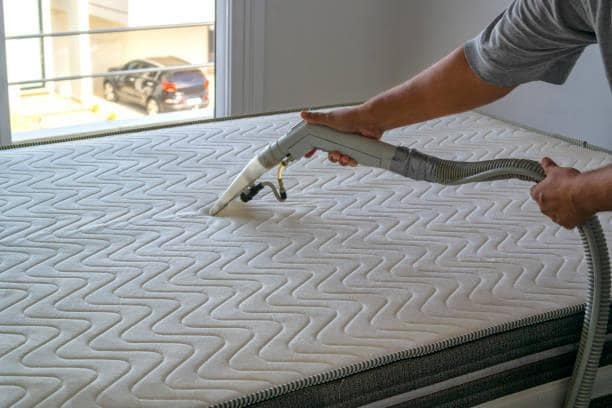
Eco Cleaning uses HEPA-filtered extraction. The method pulls dust mite fragments, dead skin, and allergens from deeper than a household vacuum reaches, then traps them in the HEPA filter instead of pushing fine particles back into your bedroom air.
The process runs low-moisture by design. Mattress foam holds water, and water that lingers invites mold. A low-moisture method lifts what’s trapped inside without soaking the core, so the mattress dries fast and stays sound.
We clean with plant-based products and offer a fragrance-free option, which matters when the person sleeping on the mattress reacts to scents or has sensitive skin. The goal is a lighter sleep surface with fewer allergens in it, not a perfumed one.
A quick note on language. Cleaning removes and reduces allergens, dust mite waste, dead skin, and built-up moisture. It is not a sterilization treatment, and we do not pitch it as one. Fewer triggers in the surface you breathe over is the real, useful result.
How often should you clean it
For most homes, a deep clean every six months keeps buildup in check. Move to every three to four months if anyone in the house has allergies or asthma, if a pet shares the bed, or if you sweat heavily at night.
A few signs say it’s time sooner:
- You wake up congested or sneezing and it eases after you leave the bedroom.
- The mattress holds a stale smell even with clean sheets.
- It has been more than a year since the last deep clean.
- The mattress is several years old and has never been professionally cleaned.

Simple habits between cleans
Professional cleaning resets the surface. These habits slow the buildup so it lasts.
- Wash bedding weekly in hot water. Hot water removes dust mite allergens from sheets and pillowcases before they migrate into the mattress.
- Use a washable mattress protector. A zippered, allergen-blocking cover puts a barrier between you and the foam, and it goes in the wash.
- Vacuum the surface monthly. Use the upholstery attachment to pull loose skin and dust off the top between deep cleans.
- Air the room out. Open a window or run a fan after you get up so trapped moisture has a chance to leave.
- Let the bed breathe. Pull the covers back for a while before making it, so overnight moisture dries instead of getting sealed in.
FAQ
Can a dirty mattress cause allergies?
A mattress does not create an allergy, but it can hold the allergens that set one off. Dust mite waste, dead skin, and trapped dust collect in the foam, and you breathe them in for hours each night. Removing that buildup gives an allergy-prone sleeper fewer triggers right where they spend the most time.
Does mattress cleaning help with asthma?
It can help by reducing the airborne allergens around your bed. Cleaning removes dust mite fragments and waste from the sleep surface, which means less of a known trigger near your airways at night. It is not a treatment or a cure for asthma. For managing the condition itself, follow your doctor’s plan.
How often should I clean for allergy relief?
Every three to four months works well for allergy and asthma households, paired with weekly hot-water bedding washes and a washable protector. Twice a year is enough for homes without sensitivities.
Will cleaning make my mattress wet or risk mold?
No. Our low-moisture extraction lifts allergens and debris without soaking the foam, so the core never oversaturates and the mattress dries fast.
Is professional cleaning safe for sensitive skin?
Yes. We use plant-based products and offer a fragrance-free option, so there’s no heavy residue or added scent on the surface you sleep against.
When to bring in Eco Cleaning
If you wake up stuffy, your mattress has a stale smell, or it has been more than a year since a deep clean, it’s time to reset the surface. Our HEPA-filtered, low-moisture method lifts dust mite waste, dead skin, and allergens from deep in the foam and leaves it dry, with a 50-point quality checklist and photos on every job. If anything is off, our 100% Satisfaction Guarantee gives you a 24-hour window to flag it, a free re-clean within 48 hours, and a refund option.
Founded in 2016, Eco Cleaning has cleaned more than 20,500 properties across NYC, serving Manhattan, Brooklyn, Queens, the Bronx, and Staten Island. Book a mattress cleaning service or call (929) 531-6264.
By Alex Sonier, CEO & Head Trainer, Eco Cleaning NYC