

You sleep on your mattress a third of every day, and most people clean it once a year, if that. Sweat, skin, dust, and pet hair work their way past the sheets and settle into the surface. The fix takes about an hour and four cheap tools. Do it right and you skip the biggest mistake people make at home: soaking the mattress and trapping water inside the foam.
This guide walks the routine in order. Vacuum, deodorize, spot clean with low moisture, then dry. Follow the steps as written and you protect the materials instead of damaging them.

Why your mattress type changes the method
Before you touch a single tool, know what you sleep on. The construction decides how much moisture the mattress can take.
Memory foam and latex soak up liquid and hold it. Water sinks into the cells, sits there for days, and breeds mildew you cannot reach. Keep these dry. Light misting only, never a soaked cloth, never a steam wand parked in one spot.
Innerspring mattresses breathe better. Coils and open padding let air move, so they tolerate a little more moisture during spot cleaning. You still avoid soaking, but you have more margin.
Pillow-top and quilted surfaces need extra care on the top panel. The stitched quilting traps soil in its grooves and holds water longer than a flat surface. Work the quilted layer gently and give it more drying time.
When you are unsure, treat the mattress like memory foam and stay low on moisture. You never lose by using less water.
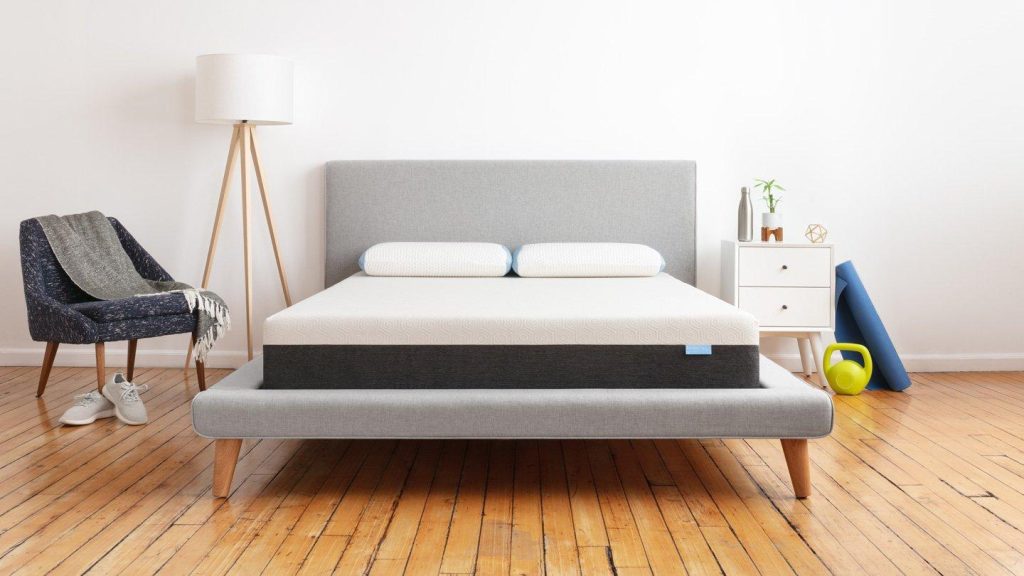
What you need
Gather everything first so you work in one pass:
- A vacuum with a HEPA or fine filter and an upholstery attachment
- Baking soda
- An enzyme cleaner (the kind labeled for organic soil like sweat and protein stains)
- Two clean white microfiber cloths
- A spray bottle with cool water
- A fan, plus an open window if you have one
Skip dish soap and bleach. Soap leaves residue that pulls dirt back in, and bleach attacks the fibers and dyes. Cool water matters too. Hot water sets protein stains from sweat instead of lifting them.

Step by step
1. Strip the bed and vacuum
Pull off the sheets, the mattress protector, and any topper. Wash those separately on the hottest setting the labels allow.
Fit the upholstery attachment and vacuum the whole top surface in slow, overlapping passes. Press into the seams, the piping, and the quilted grooves, because that is where dust and hair collect. Vacuum the sides. Then turn the mattress and vacuum the bottom. Slow strokes pull more out than fast ones.

2. Deodorize with baking soda
Sift a thin, even layer of baking soda across the whole top. Baking soda pulls moisture and absorbs odor from the surface, no scrubbing involved.
Let it sit at least 30 minutes. Two hours is better, and a full afternoon near a sunny window is better still. The longer it sits, the more it draws out. When time is up, vacuum every grain back off with the upholstery attachment.
3. Spot clean with low moisture
Now handle the marks the vacuum left behind. The rule here is simple: lift, do not soak.
Mist the enzyme cleaner onto a microfiber cloth, not onto the mattress. Blot the spot from the outside edge inward so you do not spread it. Let the enzyme sit a few minutes to break down the organic soil. Then blot again with the second cloth, this one dampened with cool water, to lift the cleaner back out.
Press, lift, repeat. Never scrub, never pour. On memory foam and latex, keep the cloth barely damp. On innerspring you can go a touch wetter, but you still blot rather than saturate. If a mark needs another round, let the area dry first, then repeat.
4. Dry it fully before you cover it
Drying is the step people rush, and rushing it is how mattresses grow mildew.
Stand a fan next to the mattress and aim it across the surface. Open a window or door to move air through the room. If the day is dry, prop the mattress on its side near sunlight for an hour or two. Press a dry cloth to any spot you cleaned; if it comes back damp, the mattress is not ready.
Give it two to four hours minimum, longer for memory foam and quilted tops. Put the protector and sheets back only when the surface is dry to the touch all the way through.
How often to do this
Run the full routine every three to six months. In between, two habits keep the work light:
- Vacuum the surface once a month while you change the sheets.
- Use a washable mattress protector and wash it with your sheets. It catches sweat and spills before they reach the mattress, and it cuts your deep-clean workload in half.
Homes with pets, kids, or allergies should lean toward the three-month end of that schedule.
FAQ
Can I steam clean a mattress?
Be careful. Steam adds heat and moisture, and on memory foam or latex that water sinks in and stays. If you steam at all, keep the wand moving, never park it, and follow with heavy drying. For foam mattresses, the low-moisture blot method in this guide is the safer route.
Is this safe for memory foam?
Yes, as long as you keep moisture low. Vacuum, deodorize with baking soda, and spot clean by misting the cloth instead of the mattress. The danger with memory foam is never the cleaning, it is the soaking.
How long until I can sleep on it?
Once the surface is dry to the touch through every cleaned spot. Plan on two to four hours with a fan running, and longer for memory foam or a quilted top. Press a dry cloth to check before you make the bed.
Will baking soda damage the mattress?
No. It sits on the surface, absorbs odor and moisture, and vacuums off clean. Just take the time to remove all of it so no grit stays behind.
What if a stain will not lift?
Let the area dry, then repeat the enzyme blot once more. Set-in marks sometimes need a few gentle rounds. If it still holds after that, a professional has extraction tools that reach deeper than a cloth without over-wetting the foam.
When to bring in Eco Cleaning
The home routine handles upkeep. Some jobs ask for more: a mattress that has gone years without a deep clean, heavy odor worked into the core, or memory foam you would rather not risk over-wetting yourself.
Our team has cleaned more than 20,500 properties across NYC since 2016. For mattresses we use a HEPA-filtered vacuum, an enzyme pre-treatment for organic soil, and low-moisture extraction that lifts what is trapped without saturating the foam, followed by controlled drying. Every job runs through a 50-point quality checklist with photos and our 100% Satisfaction Guarantee: a report within 24 hours, a free re-clean within 48 hours if anything is off, and a refund option if it still misses the mark. We work with plant-based products and serve Manhattan, Brooklyn, Queens, the Bronx, and Staten Island.
Book a mattress cleaning service or call us at (929) 531-6264.
By Alex Sonier, CEO & Head Trainer, Eco Cleaning NYC


